Iboga, Africa’s Best-Kept Secret
One of the oldest medicines on the planet, and one of the least known: what the Bwiti see in iboga, and why it is not for everyone.


All world religions address the causes of human misery and suffering, offering teachings, formulas, and solutions that lead to enlightenment and eternal happiness. You can free yourself from the cycle of birth and death, or Samsara, through Moksha, cleanse yourself from original sin through baptism, or attract good karma by following the Tao.
But in Africa, the simple truth springs from the root of a plant. True transformation is being able to see who you really are, a realization you can attain after years of therapy and meditation, or within just a few hours under the influence of Iboga.
The plant at the heart of Bwiti
In the depths of the African tropical forests, a psychoactive evergreen shrub with dissociative properties grows, used by shamans for millennia for psychological introspection and spiritual exploration. Iboga, translated, means “to care for” or “to heal.” It has been used for centuries by traditional communities in West Africa in ceremonies of initiation into truth or healing.
Iboga is a powerful entheogen (“filled with God”) from the Apocynaceae family, such as Tabernanthe Iboga, Voacanga Africana, and Tabernaemontana Undulata. The shamanic practices of the Bwiti use these plants to aid in healing physical, emotional, and psycho-spiritual ailments.
The spirit of this medicine is medically known to be effective in treating opioid addictions. Westerners are increasingly attracted to working with these natural healing modalities as conventional routes quickly become congested. The demand for Iboga facilitators, healing retreats, and detoxification centers is flourishing in response to addictions affecting Western culture.
This unique medicine is very different, being much more potent than any other visionary plant like psilocybin mushrooms, peyote, or ayahuasca.
It’s one of the oldest medicines used on the planet, yet among the least known.
The spirit of the plant requires serious preparation before embarking on the journey for a safe and powerful psychedelic experience. Without proper preparations, Iboga can cause fatalities, so adhering to the latest medical protocols is paramount for profound shamanic healing and awakening.
Beyond addiction: the patterns we inherit
While most people have heard of Ayahuasca or San Pedro, Iboga is a bit more elusive to many. In the Western world, Ibogaine is generally used to treat addictions, mainly opioids, amphetamines, alcohol, and even tobacco. In Africa, natives refer to Iboga as a master healer, and it has long been used as a medicine and a means of spiritual enlightenment.
Iboga is not only efficient in treating addictions but is also a powerful ally in nullifying destructive habits and behaviors. Many people, including you, might be addicted to certain emotions like fear, anxiety, depression, or various harmful substances, food, pornography, negative thoughts, and emotions.
You might be addicted to recurring patterns in your life that lead to repeating toxic relationships. Or the inability to finish tasks because of the story you keep telling yourself: “Why bother, you’ll never succeed anyway,” “You will fail because you were not born with the same chances as others!”
Most of us are addicted to patterns, and it begins with our DNA, with our epigenetics. Prior experiences that we might not even be aware of come from our ancestral lineage, transmitted through our DNA. According to experts in the field of behavioral epigenetics, traumatic experiences from our past or our ancestors’ past leave molecular scars that adhere to our DNA.
Our experiences and our ancestors’ experiences never truly disappear, even if they have been forgotten. What if your grandmother’s predisposition to depression was caused by the neglect she suffered as a newborn? What if this is part of your own molecular residue? What if this could be changed?
What an iboga journey is like
Venturing on an Iboga journey is a personal and therapeutic experience and will tend to confront you with your past and your shadow elements. For many, Iboga takes the form of a teacher, it’s direct but not commanding, it’s powerful and yet gentle, it has a soft touch while being painfully honest and to the point.
While under the influence of Iboga, the user sees themselves in a detached state. You’re able to see your past lives without the full emotional intensity and attachment such experiences can hold. This allows for the processing of things without being overwhelmed emotionally.
Iboga provides a complete defragmentation of the brain. Many people see Iboga as a profound way to press the life reset button and provide a new and solid foundation for healthy and lasting change. After taking Iboga, it becomes easier to change direction and gain new healing perspectives on life.
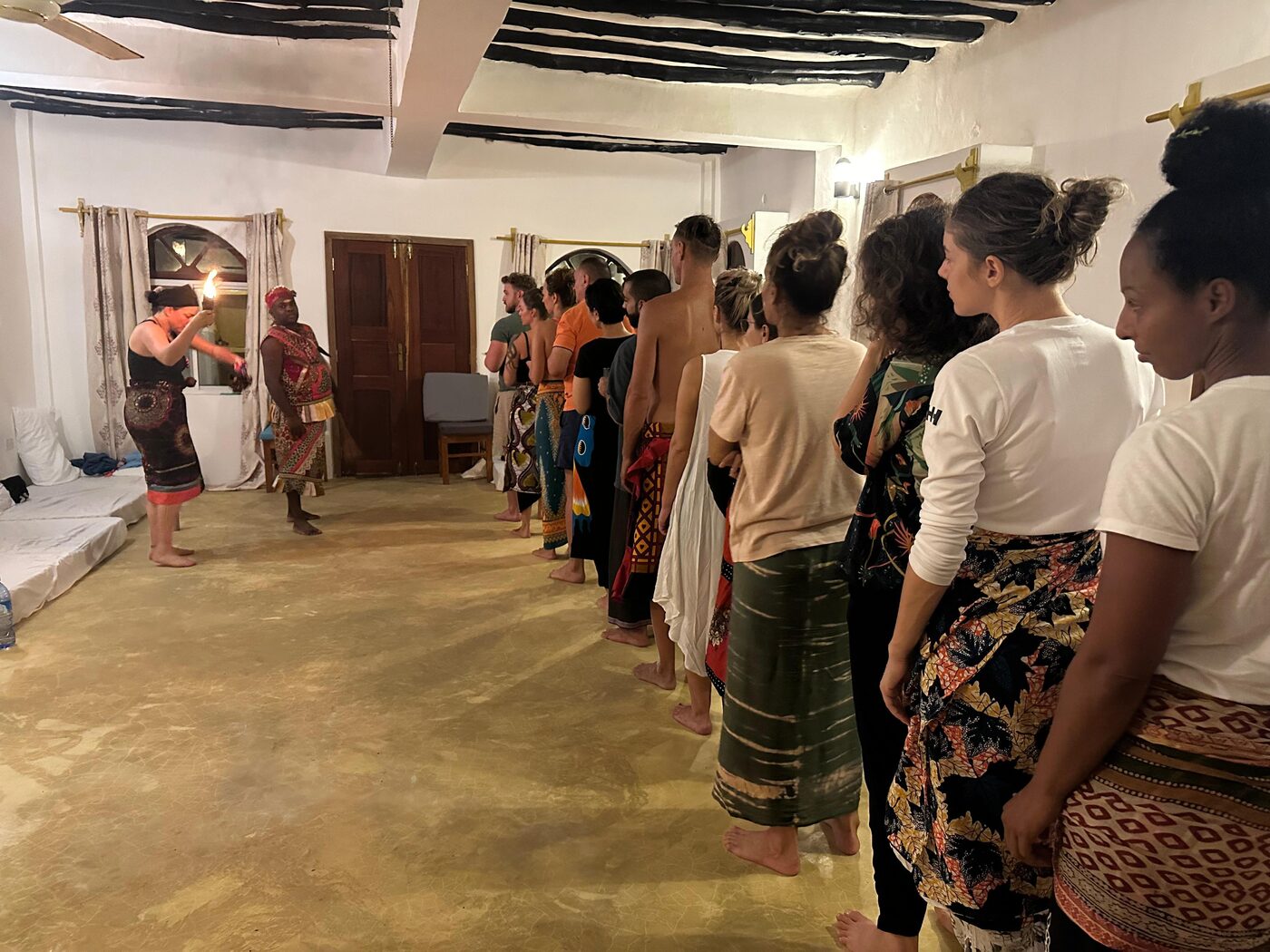
This Bwiti initiation tradition helps us to know ourselves at a very deep level. It helps to heal everything that’s not working in our life and gives us the opportunity to change it. During the initiation, people can reconnect with their higher self.
They can reconnect with their ancestors and attain the purpose and divinity of their own soul. This helps those people who feel “stuck” and in a place of stagnation. It gives people this inspiration to understand their true gifts and purposes.
A harsh teacher, and why safety comes first
Iboga is often seen as a harsh, severe medicine that presents you with the hard reality of life and points out your missteps. Some describe it as scary and unpleasant. Many times, when people research Iboga or Ibogaine on the internet, they come across a few horror stories about deaths related to this potent plant-based drug.
According to a study presented by Dr. Kenneth Alper, examining cases from 1992-2008, it was found that deaths were caused by additional factors: contraindicated medical or psychiatric conditions, improper dosage, inexperienced facilitators, self-administration, or tampered medicine.
Iboga amplifies awareness of unconscious and subconscious patterns. It provides a much deeper perspective on thought structures and the mind’s habitual use. It unlocks self-sabotaging patterns inherited in DNA through epigenetics. It significantly enhances the capacity of the brain and the central nervous system.
It resets the reward pathways in the brain, leading to joy and ecstasy as Iboga transforms into noribogaine. It improves willpower—not from a place of force but from understanding the barriers to gracefully fulfilling life’s demands. It aids in healing trauma.
Unlike other medicinal plants, Iboga offers a straightforward and sincere approach. It shows you your mistakes, helps you regain control, and offers ways to correct your errors. This is the significant benefit of Iboga—its teachings can be highly effective, albeit difficult for those not ready to surrender. With this plant, you can’t pick and choose; you have to accept the lessons learned, or your journey becomes much more challenging.
Rite of passage, and the work of surrender
The Bwiti culture understands holistic healing as inclusive of physical, emotional, and spiritual well-being and uses Iboga as a rite of passage to bring this healing tool into their community. It is said that Western society has lost its ways of establishing a holistic rite of passage, leading to a psychological illness epidemic seeping into our humanity’s veins. This medicine is used to provide a way to confront darkness with the guidance of ancestors.
It is said that suffering arises in an Iboga ceremony when one chooses to fight against the medicine. The ego creates the path of suffering and directly reflects how you present yourself in life.
The Bwiti culture says that when you experience suffering, you’re experiencing how your ego projects future suffering while resisting the present moment. What you resist, persists. Iboga teaches you about death and rebirth, how to navigate your psyche’s depths to reveal limiting beliefs and heal traumas that have brought suffering into your life.
Some say that as powerful as Iboga is, it must be scary. This only happens if your mind allows it to be scary.
Iboga is a teacher that lets you be with yourself long enough to awaken the smoldering divinity within.
Who it is for
Iboga is a potent plant-based medicine with extraordinary benefits; however, it is meant only for those truly prepared to experience growth and change, to know themselves on a deeper spiritual level, to find answers to unanswered questions, for individuals who feel stuck and stagnant, interested in positive transformation, eager to delve into their divine essence. We carefully review and interview each potential new person wishing to be initiated. Not everyone is qualified for this experience.
Iboga is not a miracle; the miracle resides within us.
It is a self-healing process, as all the answers are within us. Sometimes we choose to ignore our intuitive knowledge because our ego and conscious mind control these thoughts. Iboga helps us amplify our intuitive knowledge so we can become more decisive, clear, and in touch with our true selves. In suffering, there lies a mystery that makes change possible.
Why Zanzibar
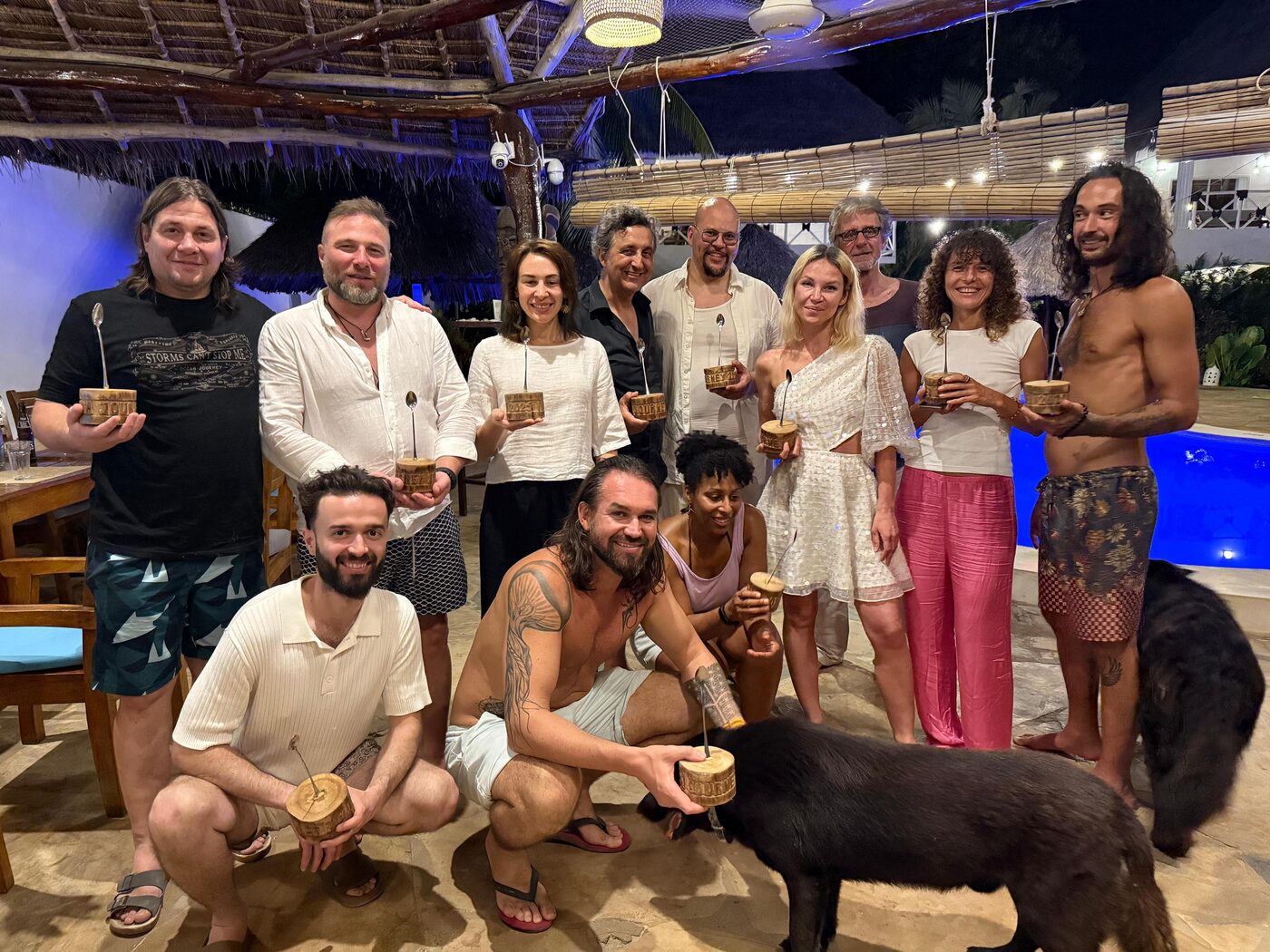
While many are striving to turn Zanzibar into the new Ibiza or Tulum, focusing on profit by distracting people from truth, there are other efforts geared towards helping individuals delve deep within themselves, understand their genuine nature, and find harmony. At Ananda Retreats, like-minded individuals gather and learn through collective work.
This work enlightens you at profound levels, enabling a better understanding of yourself and your role in the world. Engaging with sacred plants in this manner can swiftly heal sadness, anger, trauma, shame, anxiety, jealousy, addiction, and even illness. We invite you to join us in Zanzibar to illuminate your path through a journey into the dark.